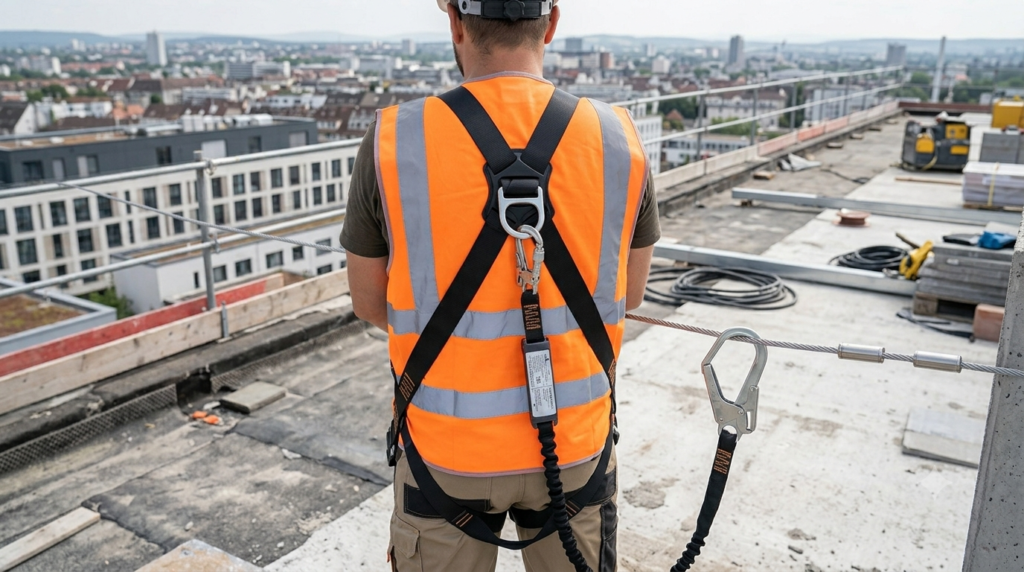
"Professional construction safety photography of worker correctly wearing full body safety harness on rooftop construction site, harness straps clearly visible across chest shoulders and thighs, lanyard connected to horizontal lifeline cable, rooftop edge visible in background with city skyline, natural daylight, photorealistic safety documentation photography, 16:9 ratio, no face visible, focus on harness system and connection points"

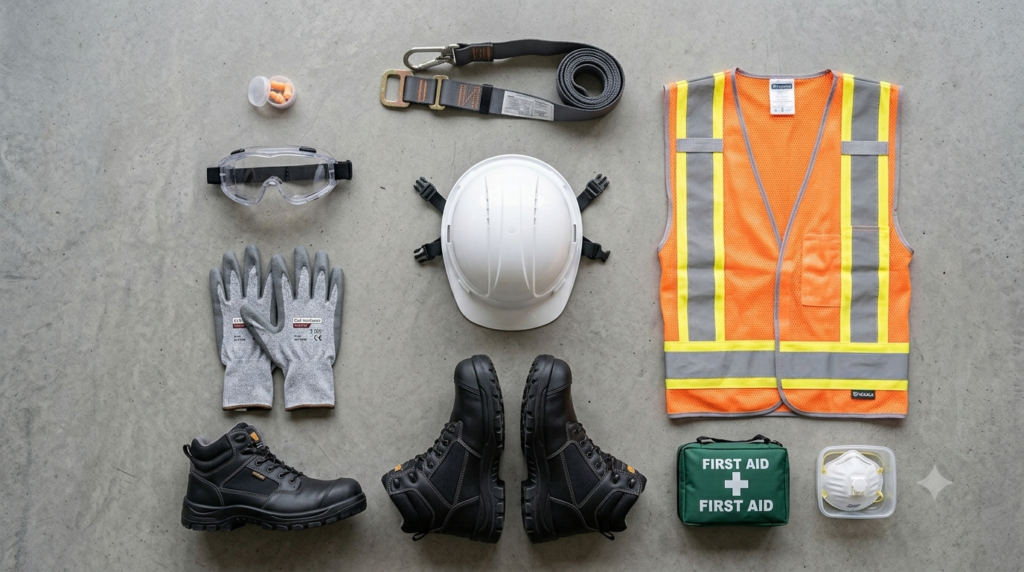
EPI sur chantier : casques, chaussures et gants — le guide complet

C’est une anecdote que je raconte toujours en ouverture de mes sessions de formation sécurité, parce qu’elle illustre mieux que n’importe quel chiffre statistique le rôle concret des équipements de protection individuelle. Sur un chantier de réhabilitation d’un ouvrage d’art en région lyonnaise, en 2017, un compagnon maçon recevait la chute d’un outil depuis le

"Professional flat lay photography of complete set of construction PPE personal protective equipment arranged neatly on clean concrete floor, white hard hat center, S3 safety boots below, cut resistant work gloves beside, high visibility orange vest, safety goggles, all professional grade equipment, natural overhead lighting, photorealistic, 16:9 ratio, no people"

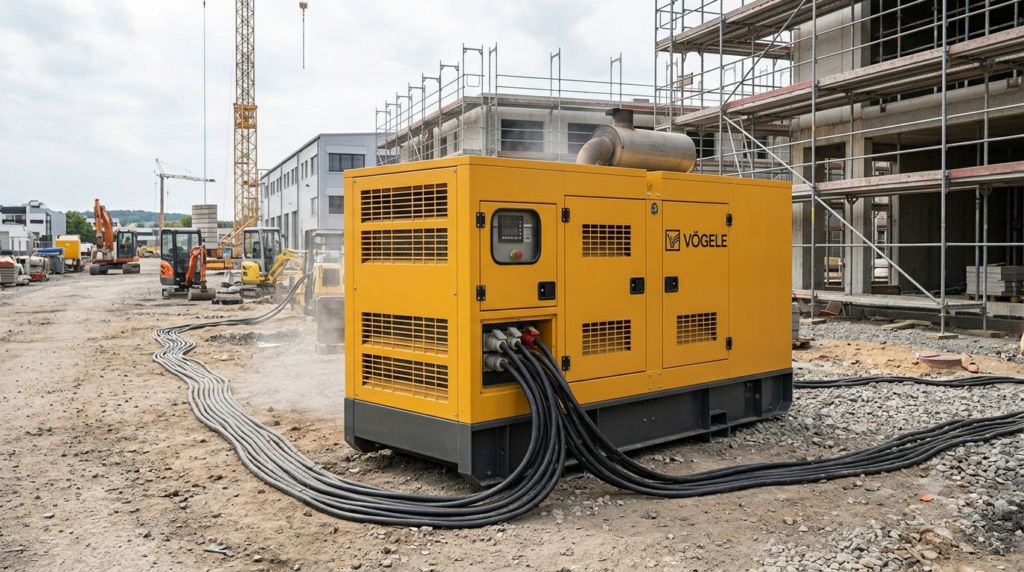
Groupes électrogènes sur chantier : puissance, choix et entretien

C’est un équipement qu’on remarque rarement tant qu’il fonctionne, et qu’on ne peut plus ignorer dès qu’il tombe en panne. Sur un chantier de rénovation d’un château historique en Bourgogne, en 2019, j’ai vécu une situation qui illustre parfaitement cette dépendance invisible. L’entreprise de restauration intervenait sur un bâtiment sans alimentation électrique permanente, avec un

"Professional photography of industrial diesel generator set running on construction site, soundproofed yellow generator housing with ventilation grilles, power distribution cables running from output panel to construction equipment in background, site buildings and scaffolding visible, overcast natural daylight, realistic construction site photography, 16:9 ratio, no people visible"

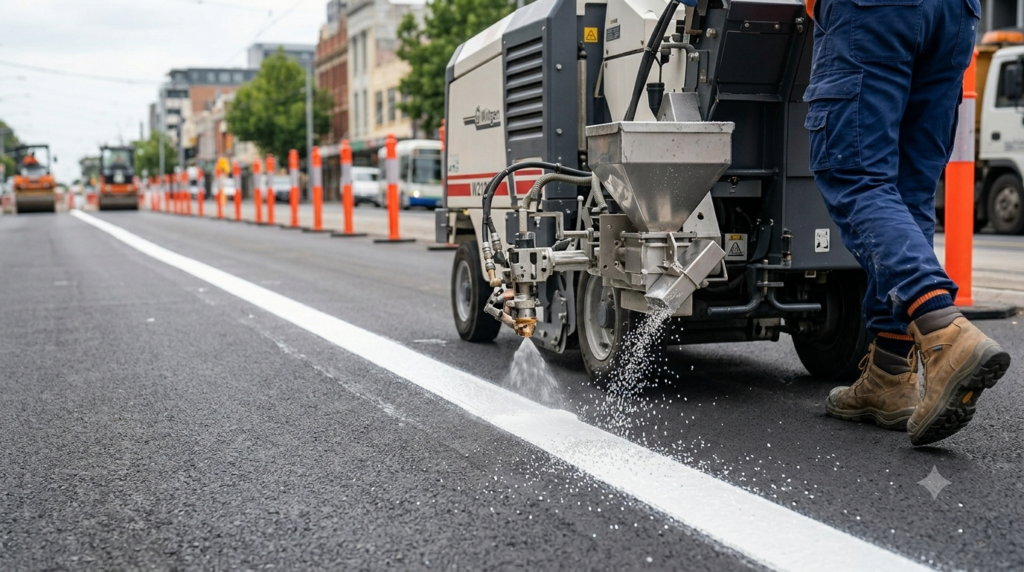
Marquage routier : équipements et techniques pour une signalisation durable

C’est une opération de chantier qui n’impressionne personne au premier regard — on voit une machine avancer lentement sur une chaussée en traçant des lignes blanches ou jaunes, et on passe son chemin sans y prêter plus d’attention. Pourtant, derrière cette apparente simplicité se cache une technicité réelle, que j’ai découverte en profondeur lors d’une

"Professional photography of road marking machine applying fresh white thermoplastic road markings on dark asphalt, machine showing paint spray system and glass bead dispenser in operation, freshly painted solid white line visible behind machine, road construction zone with cones in background, natural daylight, photorealistic road construction photography, 16:9 ratio, operator legs only visible, no face" --ar 16:9 --style raw --v 6

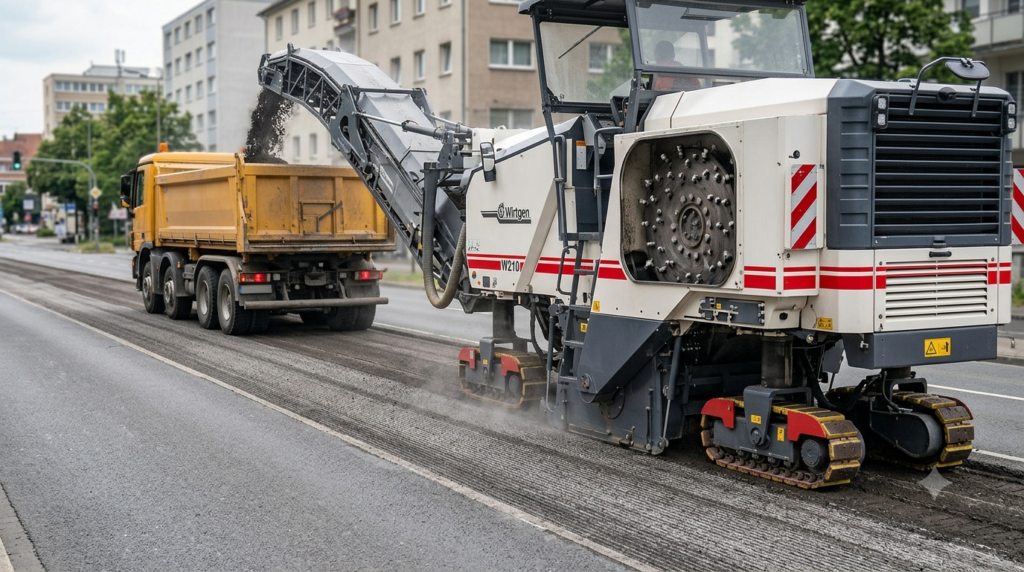
Fraiseuses à froid : décapage sélectif et recyclage des chaussées

Sur un chantier de réhabilitation d’un boulevard urbain à Grenoble, en 2020, j’ai assisté à une opération de fraisage à froid qui illustrait parfaitement la précision dont ces machines sont capables aujourd’hui. La ville exigeait le décapage sélectif de la seule couche de roulement sur 6 centimètres d’épaisseur exacte, sans toucher à la couche de

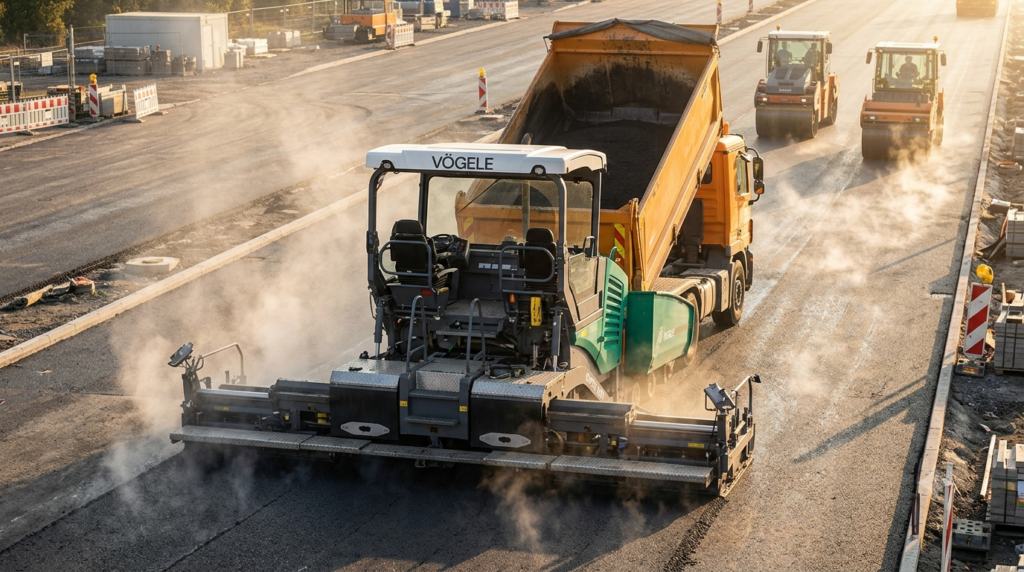
"Professional photography of asphalt paver Vogele Super 1800 laying fresh black hot mix asphalt on road construction site, full machine visible with screed extended, steam rising from fresh asphalt surface, dump truck positioned in front feeding material into hopper, road rollers visible in background beginning compaction, golden afternoon light, photorealistic, 16:9 ratio, no faces visible"

Finisseurs d’enrobés : technologie et innovations dans le pavage routier

C’est un engin que j’ai longtemps considéré comme secondaire dans ma hiérarchie personnelle des machines de chantier — à tort, comme j’ai fini par le comprendre sur un chantier de réfection d’une route nationale en Ardèche, en 2018. L’entreprise titulaire du marché avait mobilisé un finisseur Vögele Super 1800-3 pour la mise en Å“uvre d’une

"Professional photography of asphalt paver Vogele Super 1800 laying fresh black hot mix asphalt on road construction site, full machine visible with screed extended, steam rising from fresh asphalt surface, dump truck positioned in front feeding material into hopper, road rollers visible in background beginning compaction, golden afternoon light, photorealistic, 16:9 ratio, no faces visible"

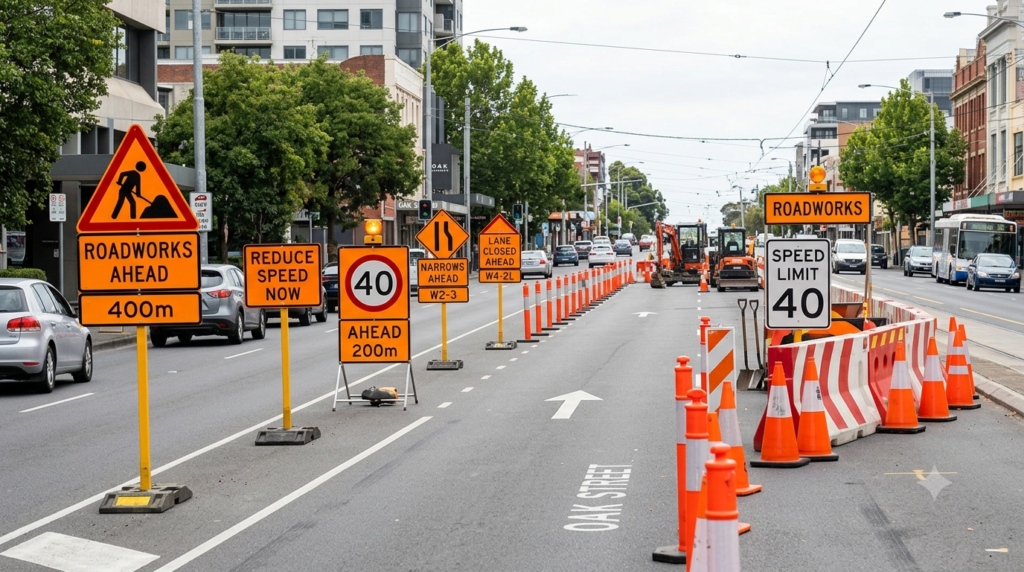
Signalisation temporaire de chantier : sécuriser la zone de travaux

C’est une responsabilité légale et morale que j’ai toujours prise très au sérieux depuis un incident survenu sur un chantier de réfection de voirie à Bron, en 2015, lors de mes premières années comme chef de chantier. Une signalisation temporaire de nuit avait été installée en fin d’après-midi par une équipe dont c’était la première

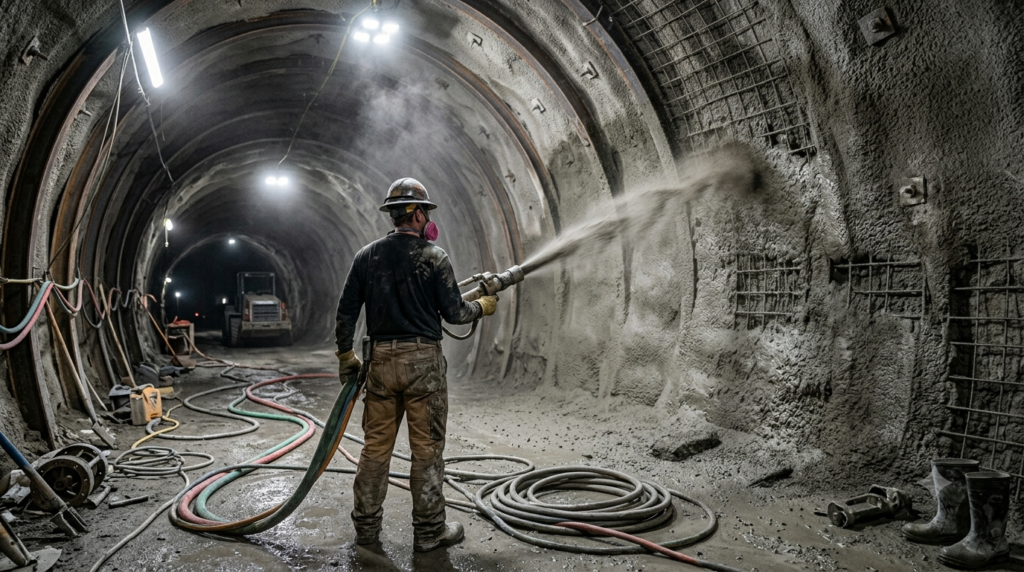
"Professional construction photography of shotcrete spray application inside underground tunnel, worker operating spray nozzle applying wet concrete mixture onto curved tunnel wall surface, visible spray trajectory and concrete buildup on rock support structure, industrial lighting illuminating confined underground space, dust particles visible in air, safety equipment and hoses on tunnel floor, photorealistic underground construction photography, 16:9 ratio, worker shown from behind only, no face visible" `--ar 16:9 --style raw --v 6`

Matériel de béton projeté (gunite) : procédé sec vs procédé mouillé

C’est sur un chantier de réhabilitation d’un tunnel ferroviaire dans les gorges de l’Ardèche, en 2019, que j’ai vraiment pris conscience de la sophistication technique qui se cache derrière une opération qu’on résume souvent un peu vite à « projeter du béton sur une paroi ». L’entreprise spécialisée intervenant sur ce chantier utilisait un procédé par voie

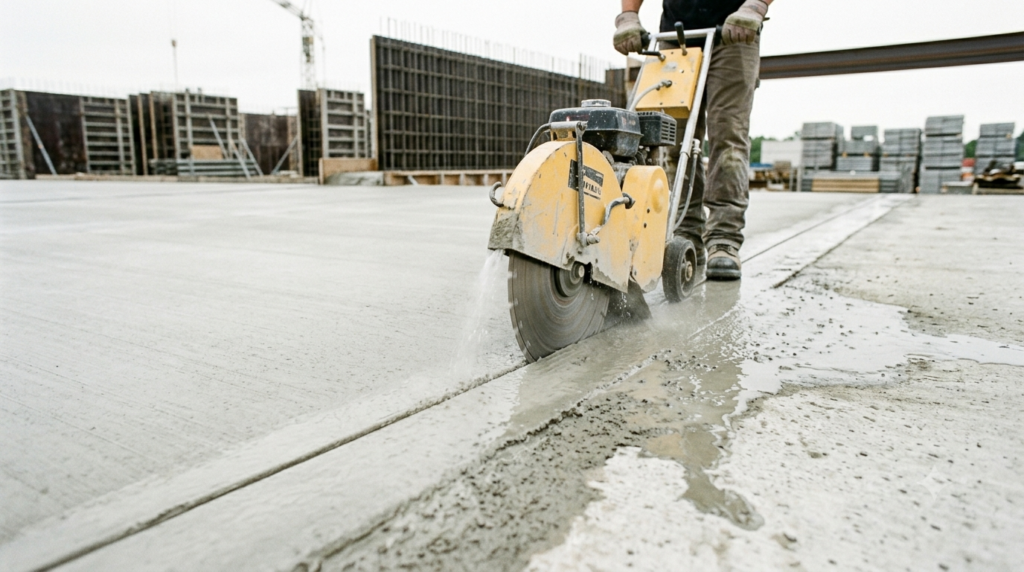
"Professional construction photography of walk-behind concrete saw cutting control joint into fresh grey concrete slab, diamond blade creating clean straight cut line with visible water spray cooling the blade, concrete dust and water mixture along cut path, operator's hands and legs visible on machine handles, outdoor parking lot or warehouse floor setting, natural daylight, photorealistic construction photography, 16:9 ratio, no face visible, sharp focus on blade and fresh joint line" --ar 16:9 --style raw --v 6

Sciage du béton : timing, profondeur et choix de la lame diamantée

C’est une erreur de timing qui m’a marqué très tôt dans ma carrière, lors de l’un de mes premiers chantiers en tant que conducteur de travaux junior chez Vinci Construction. Sur une dalle de voirie en béton de 18 centimètres d’épaisseur réalisée dans le cadre d’un aménagement de zone d’activités près de Lyon, l’équipe avait

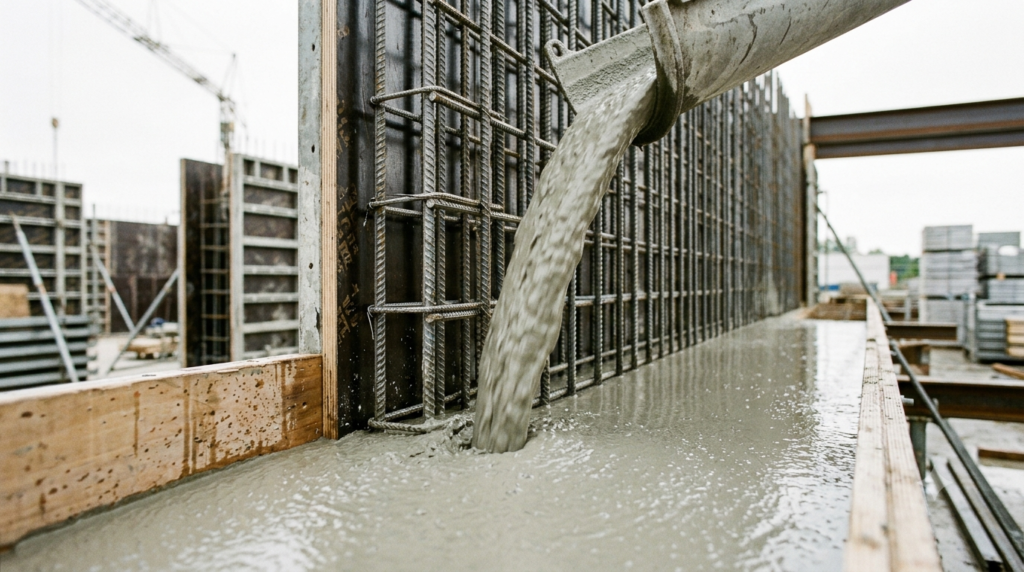
"Professional construction photography of self-compacting concrete being poured into densely reinforced wall formwork, fluid grey concrete visibly flowing and self-leveling around closely spaced steel rebar without any vibration equipment present, smooth liquid concrete surface reflecting light, construction site setting, photorealistic close-up showing the distinctive flowing texture of self-compacting concrete, natural daylight, 16:9 ratio, no people visible" `--ar 16:9 --style raw --v 6`

Béton autoplaçant : matériel et formulation de la composition

C’est une technologie qui a complètement transformé ma vision de certains chantiers de génie civil complexe, et je me souviens précisément du moment où j’en ai mesuré tout le potentiel. Sur un chantier de réalisation de voiles de refend fortement ferraillés pour un parking souterrain à Lyon, en 2020, l’entreprise gros Å“uvre avait fait le